Bauls; mystic minstrels from Bengal
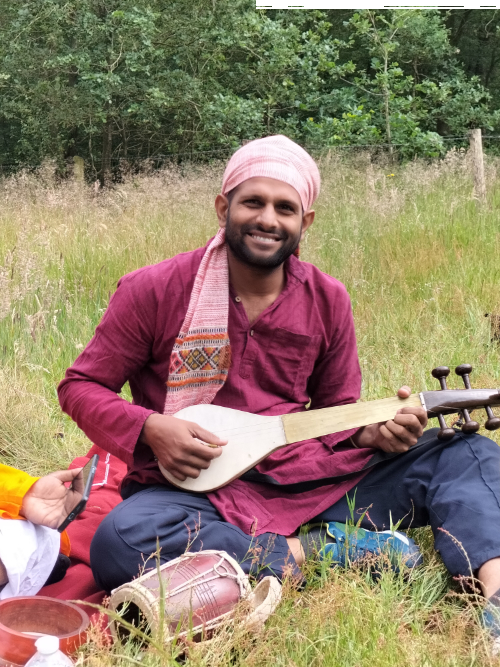
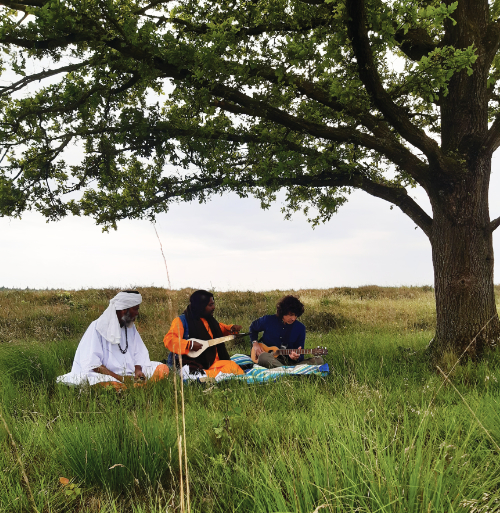
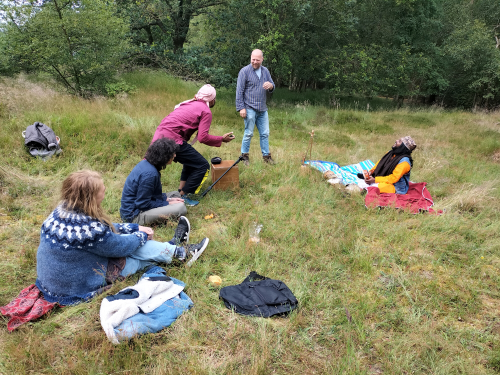
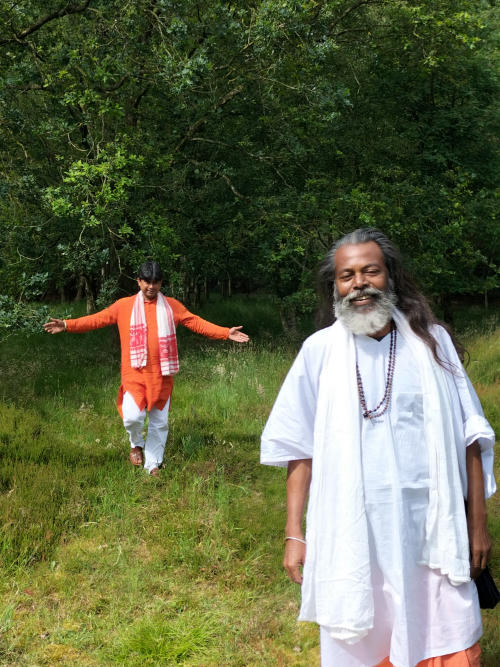
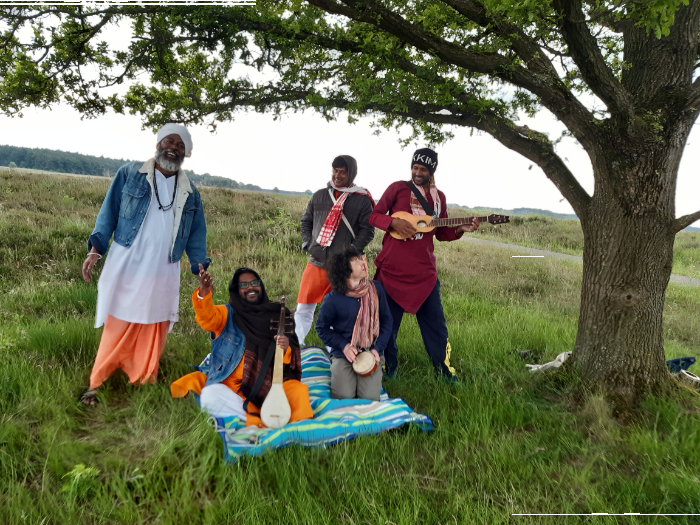
In June 2024 the Bauls Goutam, Swapon, Gopi, together with Indranil, visited friends in the Netherlands. These recordings we did, spontaneously, in the Fields of Drenthe. What a wonderful experience!
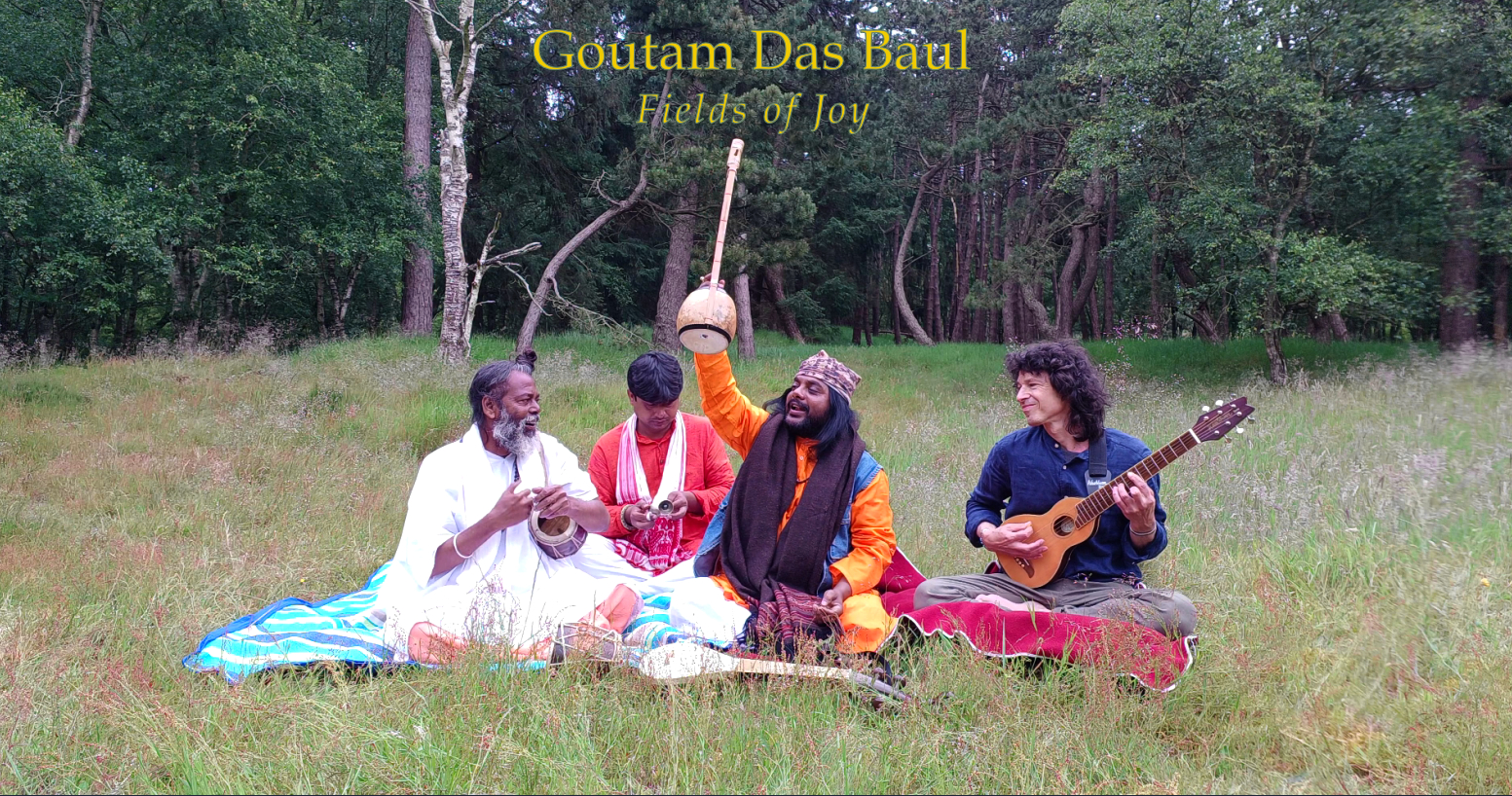
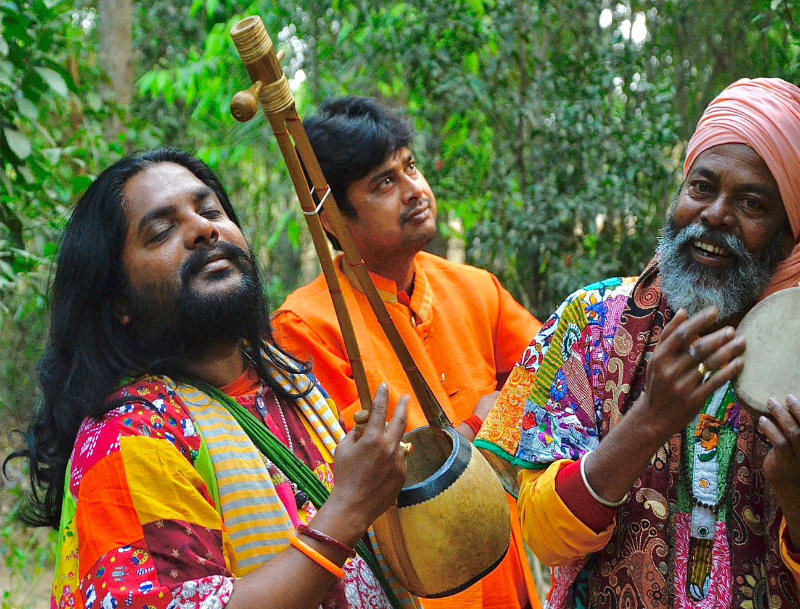
“High in the sky above a beautiful heathland in Drenthe (Holland) a skylark sings. Below him strolls a colourfully dressed group with special musical instruments. They seem to be looking for a suitable place to make music together. They love purity and prefer to live close to nature. These are three Bauls. Spiritual gurus from West Bengal (India) and one passionate musician from Groningen. Bauls have been singing their wise songs for hundreds of years. They advocate equality, respect and love. Bauls will tell you that you should not look for God in a mosque, temple of church, but you should find Him within yourself. They are real bridge builders. These four men want to build a musical bridge today, not only between religions. The skylark is curious, and it seems he wants to make clear with his beautiful song, that this is the right place. And if possible, he wants to join in. The men settle down in the grass. While they tune their instruments the lark takes off. We have given these beautiful recordings the name: Fields of Joy. We hope you will enjoy it as much as we do.”
I’ve made a playlist on Youtube with the five songs we played:
1. Adkino na dekhilam Tare
2. Mahakal mahakal
3. Mon chole jai bhromone
4. Manush Bhole-sonar
5. Bare bare er asha hobena
ABOUT BAULS
In The History Of Baul Nothing Can Be Traced In Literature Sequence Before 18th And 19th Century. With Some Mahajani Padas, Kochra(Scripts), And Guru Parampara An Attempt Was Made To Present The History Of Baul Songs. Different Researchers And Baul Followers Are Trying To Establish The History Individuallly And Academically; But The History Is Still Mysterious Like The Sadhana Of Baul.
In The Book Entitled “Sri Chaitanya Charitamtrita”, Krishnadas Kabiraj Mentioned The Word “Baul”. He Most Probably Indicated A Man Mad For God Or A Man Abstinent To Material World. In This Book “Sri Chaitanya” Declared Himself As “Baul”. The Word “Baul” Could Be Derived From “Batul” Or “Bakul” Which Means The Person Mad For God. In Another Opinion,The Arabic Word “Aual”(Who Is Only Servant Of God) Or Hindi Word “Baur” Could Also Be The Origin Of This Word “Baul”. In Connection Baul Is A Group Of Independent God Lover Beyond Any Such Religion Or Religoius Belief, Having A Mysterious Practice In Ways Of Life.
Till 18th Century, There Was No Attraction Of Intellectual Society Towards These Groups Of People. Harinath Majumder (1833-1896), Known As Kangal Harinath Or Fikir Chand Baul Was First Person Attracted Towards Baul Songs From Intellectual Society Or Educated Society. He Himself Also Wrote Some Baul Songs. Regarding Attraction Towards Baul Songs, Kolkata’s Thakurbari (Tagore Family) Played A Significant Role. In This Connection We Can Mention The Two Names Jatirendranath Thakur And Rabindranath Thakur.
Rabindranath Thakur During His Visit To Shelaidaha Attracted Towards The Songs Of Lalon Fakir And Started Collecting Baul Songs. After This He Wrote Many Songs With Tune Of Baul Songs And His Many Songs Were Known To Be Deeply Influenced By Baul Songs. Appart From This He Was Also Attracted Towards The Sadhana Of Bauls. There Are Many Baul Song
Collecters And Researchers But In Spreading Baul Songs Nationally And Internationally The Main Role Was Played By Rabindranath Tagore.
The Baul Is Mainly A Path Of Sadhana. Mahajans Or Sadhaks (Spiritually Powered Persons) Mainly Express The Feelings And Realisations Of Their Sadhanas Through Their Padas (Lyrics) Of The Songs. The Singer Sings The Lyrics With Different Instruments In Villages And Earn Their Livelihood. So, The Mysterious Way Of Sadhana Of Bauls Was Mostly Confined And Limited In The Boundary Of Mahajani Akras And Guru-Sishya- Parampara; Whereas The Baul Songs Spreaded All Over. So For That Reason The Bauls Are Accepted By Common People For Their Singing Only. The Simlicity Of Words, Music And Presentation Attracted People Whereas The Use Of Symbols And Its Mysterious Theories Are Still Away From The Reach Of Common People. It Can Be Said That Bauls Uses These Symbols And Mysterious Way To Hide The Feelings And Realization From Common People. The First Evident Of These Type Of Mysterious Way Can Be Seen On “Charja Geeti”.
First Of All ,Bauls Are Mainly “Ulto Panthi” Which Created Many Riddles And Debates. In The Book Entitled “Fakir Lalon Shai: Desh Kaal Abong Silpo”, Saktinath Jha (2007), Asit Kumar Bandhopadhay Wrote In The Preface That: “In Our Country Modern Researchers Wrote Many Books Regarding Bauls And Their Theories But How Far Reality They Presented Is Being Disputed Or Suspected. In This Way Their Theories And Their Sadhanas Can’t Be Described. All Those Which Are Printed In Words Of Book Are Only The Product Of Writer’s Own Ideas And Concepts. Without Being Their Part Of Life Or Being One Of Them Nothing Can Be Known About Bauls. The Researchers Give Huge Labour But Due To Lack Of Perfect Knowledge And Observations, It Becomes Only The Exercise Of Brain”. Such As A Song Heard Since Long Period Of Time By Listeners That:
“Chander Gaye Chand Legeche
Amra Bhebe Korbo Ki…….”
But The Explanation Of This Song Was Confined To One Type Of Intellectual Exercise Only. The Original Meaning Of This Song Is Limited In Some Gurus And Meritorious Researchers Only. Most Of The Mahajani Padas(Lyrics) Are In Same Condition.
In One Side The Impact Of “Vaishnavism” And In Another Side The Impact Of “Islamic Sufism” Show The Standpoint And Stability Of Bauls Beyond Any Bond Of Religious Belief. So, Fakir, Shai, Guru, Gosai, Khyapa, Pagla All Groomed In One Festival Of Soil (Matir Utsav).
From Past To Present, Baul Tradition (Baul Parampara) Is Mixed In Different Paths, Ways Of Sadhanas And Song Tradition But Holds An Independence. Baul Songs Reflects As A Mirror Of Life To Common People. The Songs Picturizes The Human Body As A Temple. From History The Body Temlpe Is Being Worshipped By The Bauls Which Is Limited Only In Baul Akras As “Guru-Sishya-Parampara” Which Makes Baul Mysterious.
BY-
INDRANIL CHINGRI & SATYAM MAHAPATRA
KHARAGPUR, (W.B.), INDIA
ABOUT GOUTAM DAS BAUL
Journeys Through Light And Darkness Of Life, The Baul Searches Of “Moner Manush” (Beloved Man) Generation After Generation. In The Mysterious World Of Sadhana And Songs, The Baul Enjoys And Entertains Others. In Search Of Such “Moner Manush” One Of The Baul (Khyapa) Is Goutam Das Baul. In A Small Village Named “Parul Danga” Of Bolpur (Santiniketan) West Bengal, In The Year 1983 Goutam Was Born. The New Generation Baul Inters In The Mystic Path Of Light & Darkness By His Father Sudhir Das (Khyapa) And Mother Maloti Das. In The Home Place Of Village Parul Danga, Goutam Took His Education In School Named “Bolpur Sikha Niketan Ashram Vidyalaya”.
At The Age Of Only Four Years Goutam Started The Musical Journey Of Life With Father Sudhir Das Baul And Brother-In-Law Dibakar Das Baul.So Father And Brother-In-Law Are The First Musical Guru Of Goutam Das Baul. He Took The Responsibility Of Fourth Generation Baul Traditionally. In The Village Named “Jaljela” Near Satipith Known As “Kankalitala” Of Birbhum (W.B.), Goutam’s First Performance At The Age Of Eight Years Was:
“Pagol Mon Amar Nijer Lagi
Akdino Tui Nijei Bhablina…..”
In Poush Mela Of Santiniketan At The Age Of Only Eight Years Goutam Performed At The Stage. In Search Of The Root, The Little Baul Goutam Das With His Father In “Joydev Mela” Of Birbhum Sang In Front Of Baul Lovers (Anuragi):
“Jodi Eshe Thako Hari….”
After This For The First Time He Went With His Father For A Performance In The Village House Of Sagar Majumder (Uttarpara,Kolkata)
Outside His Homeplace Parul Danga. At The Age Of Nine Years Goutam Satisfied The Baul Song Lovers By His Voice. After It, Goutam Took “Mantra Diksha” From “Late Satyananda Maharaj” Of Murshidabad, Village ‘Batur’ West Bengal At The Age Of Eleven Years.
One Fine Morning At The Age Of Twelve Goutam Saw A French Women At The Akhra Of Village With A Musical Instrument Known As “Ektara” (One String Instrument). Goutam Called Her As “Anna Ma” And From That Time Goutam And Anna Ma’s Relation Was Like A Son And Mother. This Relation Existed For Twelve Years (1995-2007). The Worshipper Of Lord Shiva “Anna Ma” Established A “Shiva Linga” In Akhra Of Parul Danga (2007). Till Today Goutam Sings In Front Of That “Shiva Linga” With His “Dotara” (Two Strings Instrument) :
“Maa Tui Amai Rekhe Chole Gali
Ar Na Dili Dhora……”
In Year 2002 Goutam Das Baul Travelled France, Spain, Morocco, Belgium, Etc As Folk Artist (Baul). After This Again He Came Back To Joydev In Search Of His Root. Now Not As Singer Of Any Other Akhra,But He Formed A New Akhra Of Its Own In Year 2004 Named As “Sahaj Manush: Lalon Mancho” Which Is Every Year Inaugurated By His Father Sudhir Das Baul (Khyapa) By Lighting The Lamp Traditionally.
In The Way Of Songs And Music Goutam Is Trying To Search His “Moner Manush” But He Is Failing To Achieve It. In Journey Of Life When Goutam Is Breaking & Constructing Him Internally With Different Thinkings And Theories, In Certain Time He Came In Contact To “Gour Hari Das” (Guru Baba) Of Nichinda Village Of Dubrajpur, West Bengal. Gour Baba (Guru Baba) Started Teaching Goutam About The Complicated Theories Of Deha (Body), Kama (Sex), And Prem (Love) In Simple Ways.
Goutam Eventually Came To Identify “Prakriti”, “Purusha” And “Deha Ghori”. The Baul Enters To The Mysterious Life Of Bauls, Since 2007 Traditionally As “Guru-Sishya-Parampara”. Goutam Is Maturing And
Stabiling On The Path Shown By His Guru. In The Other Side The Name Of Goutam Das Baul Was Also Spreading Through Out The World. Now The Call Is From Bangladesh Where He Performed The Song :
“Kori Mana Kam Charena Madone…….”
In The Hidden Feelings And Realization Of Sadhana And Wonderful Voice Of Song And Music Created A New Mysterious World Of Baul. And By Taking Responsibilty Of His Generation He Came In Light As “Goutam Das Baul”.
BY-
INDRANIL CHINGRI & SATYAM MAHAPATRA
KHARAGPUR (W.B.), INDIA.